Kinetisense
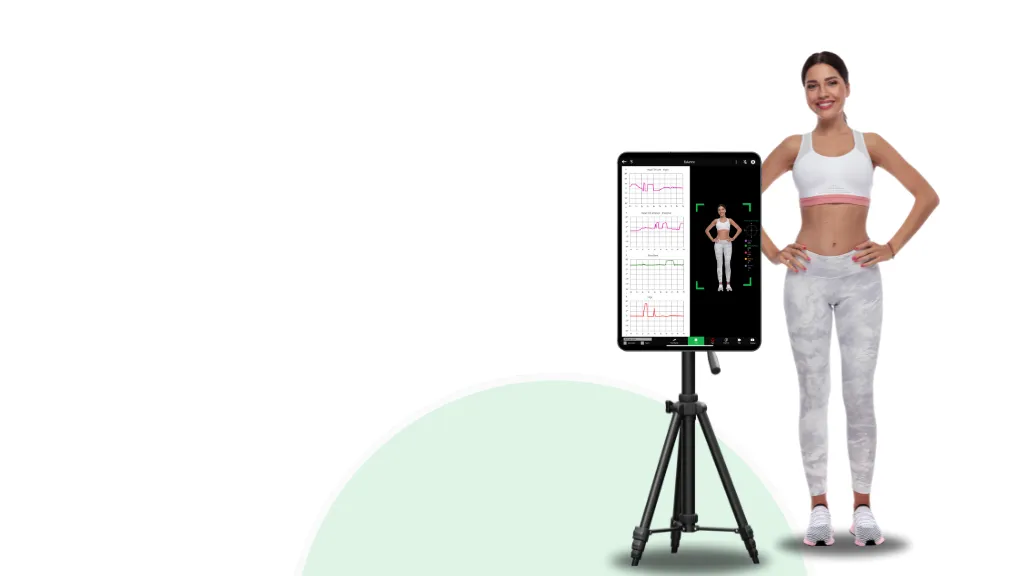
Kinetisense uses AI and the iPad camera to capture full-body 3D movement across the sagittal, frontal, and transverse planes simultaneously — no wearables, no markers. The underlying methodology is the Neuroplanar Method®, which connects mechanical movement findings to neurological control systems. The result isn’t just a score — it’s a clinical map of why dysfunction is occurring.
The standard protocol is the KAMS (Kinetisense Advanced Movement Screen) — a 10-movement compiled workflow that produces a KAMS composite score plus Functional Planar Mapping (FPM): 7 Movement Indexes that classify each deficit as a stability or mobility problem, mapped to a specific movement plane.
Deep dive: Kinetisense assessment modules, metrics & clinical use →
Footmaxx AcquireTD
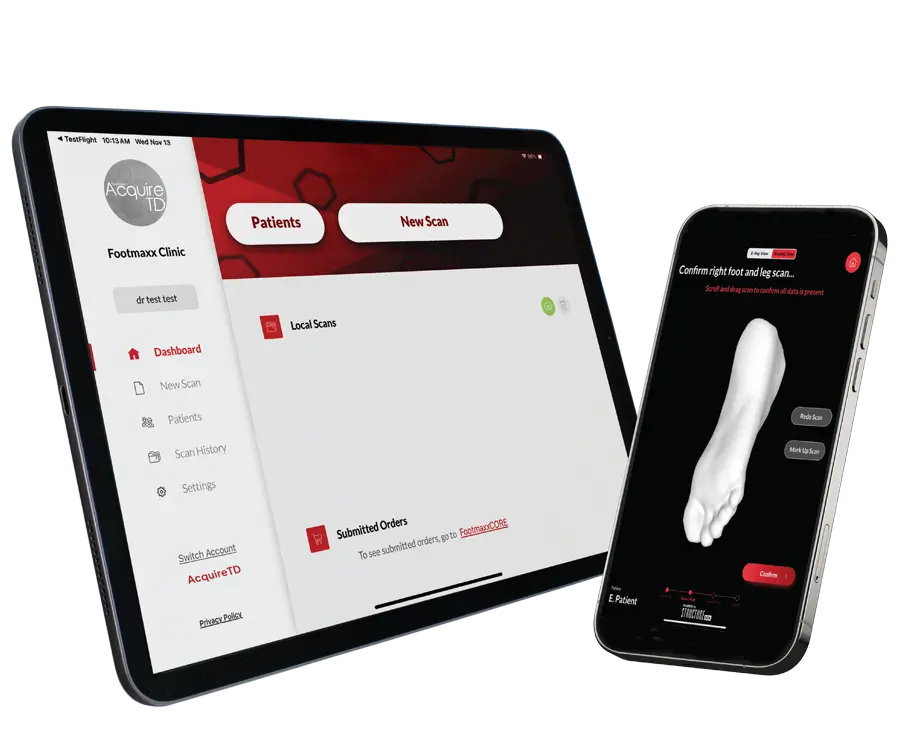
AcquireTD uses the iPad Pro M4 to scan both feet in two positions — unloaded and loaded. The difference between those two scans shows exactly how your foot collapses under body weight.
A foam cast or pressure plate can’t capture this. The difference between the two scans is what determines the exact orthotic prescription needed to correct how your foot loads in real life.
The Complete Picture
No Single Device Tells the Complete Story
Each device answers a question the others cannot. Together, they answer the question every other assessment leaves open: why.
How you move
How structure supports it
Three categories • Same-day delivery • Normative benchmarks
“Kinetisense shows you how you move. Footmaxx AcquireTD shows you how your structure supports that movement. ”
— Dr. Paul Bekkum, DC, CCEP